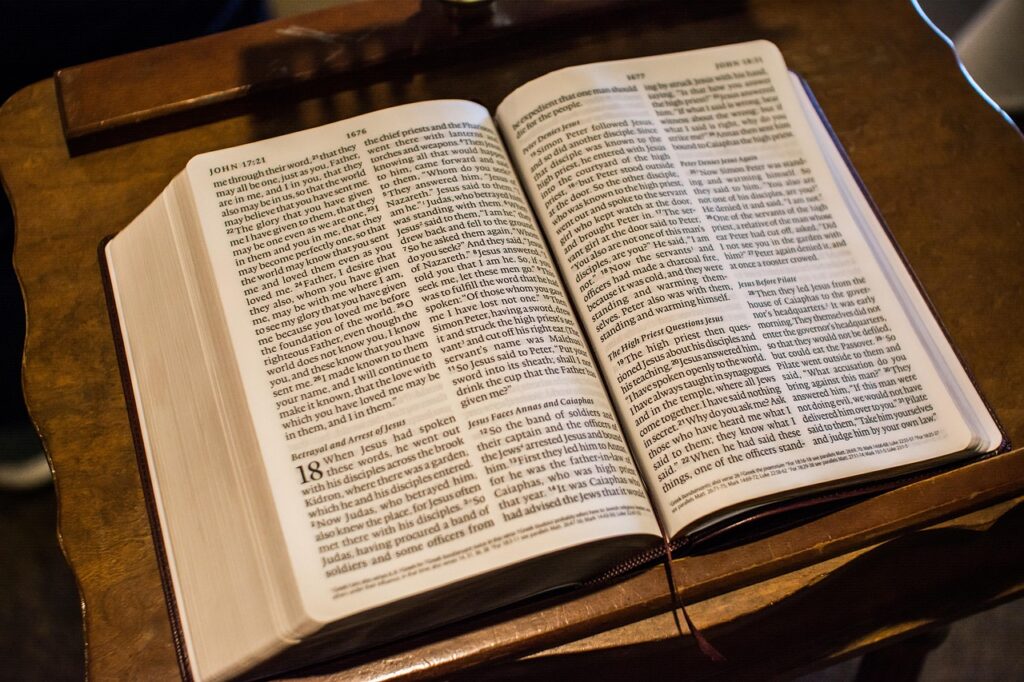
Word of God is our greatest defense and source of life. The Word of God is living, active, and powerful enough to shape our hearts and protect us from sin. When we keep the Word of God in our minds, it fulfills God’s purpose and equips us for truth. This devotion reflects on why we must abide in it daily. Abide in the Word of God daily to find strength, protection, and freedom in Christ.
Life Application
Scripture reminds us, “So shall my word be that goes out from my mouth; it shall not return to me empty, but it shall accomplish that which I purpose” (Isaiah 55:11). The Word of God always works according to His divine plan. We may forget promises or lose focus, but His truth never fades. Instead, it accomplishes exactly what He intended.
Hebrews 4:12 says, “For the word of God is living and active, sharper than any two-edged sword, piercing to the division of soul and of spirit.” This verse shows us that God’s Word is not just ink on paper but a powerful force that discerns our hearts and reveals truth. Without the Word of God, we leave ourselves open to confusion, lies, and temptation.
The psalmist declared, “I have stored up your word in my heart, that I might not sin against you” (Psalm 119:11). Memorizing Scripture arms us with the strength to resist sin and remain faithful when trials come. The Word of God is our shield, but it must be planted deeply within us.
Jesus also highlighted the importance of His teachings: “Truly you are my disciples if you abide in my word, and the word will show you the truth and the truth will set you free” (John 8:31-32). The Word of God is not only protection but also freedom. It releases us from deception and gives us clarity for life’s choices. By abiding in it, we find direction and true identity in Christ.
As Proverbs 23:7 says, “As a man thinketh in his heart, so is he.” What we meditate on shapes who we become. When we fill our hearts with God’s Word, we become more like Him. When we let other voices take root, we drift from His ways. The Word of God keeps us grounded, steady, and fruitful.
Therefore, today let us not simply hear the Scriptures but also live them. Every promise, command, and truth is meant to equip us for the journey. The Word of God is alive—and when we abide in it, His purpose is fulfilled in us.
Heavenly Father, teach us to set our minds on the things of God and not on the things of man. Help us to see Your beauty with spiritual eyes, to hear Your voice in quiet moments, and to walk each day with Your Spirit dwelling in us. Amen.
Spiritual eyes open us to see God’s blessings daily. Train your mind to think spiritually. Experience His Spirit through worship and creation. Spiritual eyes allow us to perceive the things of God. This devotion reminds us to see life with a focus on God’s Spirit and blessings. By meditating on His creation and His Word, we shift from carnal thoughts to spiritual vision.
Life Application
Jesus gave a sharp rebuke to Peter, saying: “Get behind me, Satan! For you are not setting your mind on the things of God, but on the things of man” (Mark 8:33). The warning is clear—our thoughts shape our walk with God. If our minds are trained only on human desires, we miss the deeper truths of the Spirit.
Paul reminded the Corinthians: “Do you not know that you are God’s temple and that God’s Spirit dwells in you?” (1 Cor 3:16). That reality changes everything. God is not distant. He is present within us. His Spirit gives us the ability to look beyond the surface and discern His presence in everyday life.
Consider the beauty of creation. Majestic mountains, flowing streams, fruitful farmland, and even the delicate work of a hummingbird—each reveals the hand of God. Genesis 1:1 declares, “In the beginning God created the heavens and the earth.” When our spiritual eyes are open, we do not merely admire nature; we recognize it as God’s handiwork and an invitation to worship.
Spiritual sight also reshapes meditation. It is not simply an exercise in quietness; it is an encounter with God. By meditating on His Word, we align our hearts with His truth and remind ourselves of Proverbs 23:7: “As a man thinketh in his heart, so is he.” What we focus on defines us. If our thoughts are spiritual, our lives reflect the Spirit’s power.
Therefore, choose each morning to focus on your blessings. Breathe deeply, look around with spiritual eyes, and worship God in gratitude. When trials come, remember the words of the hymn: because He lives, you can face tomorrow. Spiritual eyes help us endure today while keeping hope in the eternal promises of God.
Heavenly Father, thank You for calling us into Your family through Jesus Christ. Teach us to live as brothers and sisters, doing Your will with love and humility. Amen.
Brothers and Sisters in Christ are united by doing God’s will. Discover how the family of God strengthens daily devotion and spiritual unity. Brothers and Sisters in Christ is more than a phrase — it is the reality of our spiritual family. Jesus taught that true kinship comes not from human lineage but from obedience to the will of God. This understanding brings comfort, belonging, and unity as we walk together in faith.
Life Application — Brothers and Sisters in Christ
When Jesus was asked about His family, He responded in Mark 3:33–35: “Who are my mother and my brothers?” And looking about at those who sat around him, he said, “Here are my mother and my brothers! For whoever does the will of God, he is my brother and sister and mother.” This passage reveals that God’s family extends beyond bloodlines. It is defined by obedience and devotion to Him.
We live in a culture where respect is shown through titles like Mr. and Mrs., or through responses such as “yes sir” and “no sir.” While these courtesies matter, Jesus lifts our relationships higher: He calls us brothers and sisters when we submit to God’s will. That means every believer, regardless of background, becomes family in Christ. Understanding this truth shapes how we treat one another. We show honor, patience, and forgiveness because our bond is eternal.
Family of God
Proverbs 23:7 reminds us: “As a man thinketh in his heart, so is he.” If we truly believe we are members of one household of faith, our thoughts toward each other must reflect kindness and respect. Gossip, division, and envy have no place in the family of God. Instead, we build one another up, serve one another, and pray blessings over one another. This is how we live out the will of God together.
When believers gather in daily devotionals, it becomes more than a study routine. It forms a kindred relationship where joy is multiplied and burdens are shared. A brother or sister in Christ is not just a title but a calling — to serve, encourage, and love as Jesus loved. As Paul wrote in Romans 12:10, “Be devoted to one another in love. Honor one another above yourselves.”
Therefore, embrace your identity as part of God’s family. Participate fully in your devotional community, whether in person or online. Speak life into one another. Let your actions show the world what it means to be the family of God. Remember: brothers and sisters in Christ are not chosen by us — they are given by God. What a blessing it is to belong to His eternal household.
Lord, open our eyes to the depth of your Word. Help us to understand the Old Testament so we can fully grasp the promises and person of Jesus in the New Testament. Amen.
Understand Old Testament: study Hebrew Scriptures to unlock the New Testament prophecy and meaning. Understanding the Old Testament leads you to Christ. The Old Testament context unlocks the New Testament. The Old Testament is not merely background material — it is the foundation. From the 613 commandments that expand the moral and ceremonial life of Israel, to Daniel’s precise seventy weeks prophecy, to Ezekiel’s detailed millennial temple, these scriptures set the stage for everything Jesus accomplished and will accomplish. Study of the Hebrew Scriptures clarifies the New Testament in ways a New-Testament-only reading cannot.
Life Application — Understand Old Testament
When we study the Old Testament we discover patterns, promises, and prophetic timelines that point directly to Jesus. The focus is practical: grow in conviction, deepen worship, and sharpen proclamation. Understand Old Testament as a daily discipline — not a one-time read — and you will read the Gospels and Epistles with fresh eyes.
Daniel 9:24–27 (KJV)
Seventy weeks are determined upon thy people and upon thy holy city, to finish the transgression, and to make an end of sins, and to make reconciliation for iniquity, and to bring in everlasting righteousness, and to seal up the vision and prophecy, and to anoint the most Holy.
“Know therefore and understand, that from the going forth of the commandment to restore and to build Jerusalem unto the Messiah the Prince shall be seven weeks, and threescore and two weeks: the street shall be built again, and the wall, even in troublous times.
“And after threescore and two weeks shall Messiah be cut off, but not for himself: and the people of the prince that shall come shall destroy the city and the sanctuary; and the end thereof shall be with a flood, and unto the end of the war desolations are determined.
“And he shall confirm the covenant with many for one week: and in the midst of the week he shall cause the sacrifice and the oblation to cease, and for the overspreading of abominations he shall make it desolate, even until the consummation, and that determined shall be poured upon the desolate.”
Daniel’s prophecy supplies a timeline. Calculated on the Jewish calendar, many students of Scripture see how these “seventy weeks” point to the timing of Jesus’ public ministry and crucifixion, and how they also anticipate future events — testimony to how Old Testament prophecy reaches into the New.
Ezekiel 40:1–4; Ezekiel 43:7 (KJV)
“In the five and twentieth year of our captivity, in the beginning of the year, in the tenth day of the month, in the fourteenth year after that the city was smitten, in the selfsame day the hand of the LORD was upon me, and he brought me thither.
“In the visions of God brought he me into the land of Israel, and set me upon a very high mountain, by which was as the frame of a city on the south.”
And Ezekiel 43:7: “And he said unto me, Son of man, the place of my throne, and the place of the soles of my feet, where I will dwell in the midst of the children of Israel for ever, and my holy name, shall the house of Israel no more defile …”
Ezekiel’s long vision (chapters 40–48) describes a restored temple, appointed sacrifices, and a priestly order in a coming age. This vision includes details about measurements, gates, chambers, and the resumed worship life — including animal sacrifices — in a future administration. That specificity helps New Testament readers understand Revelation’s temple imagery and the millennial themes referenced elsewhere. The Hebrew Scriptures give the categories and vocabulary that the New Testament assumes: covenant, sacrifice, and kingship.
Zechariah 14 (selected, KJV)
“Behold, the day of the LORD cometh, and thy spoil shall be divided in the midst of thee.”
“And his feet shall stand in that day upon the mount of Olives… and the LORD my God shall come, and all the saints with thee.
Zechariah adds to the Old Testament witness about the Lord’s return and the restoration of Jerusalem — themes the New Testament returns to repeatedly. Reading Old Testament prophecy reveals the threads the New Testament weaves into its narrative.
So how should you apply this? First, take a prophetic book or a Torah portion and read it with Gospel lenses. Cross-reference prophecies quoted in the New Testament and note how the gospels and epistles interpret Old Testament promises. Second, teach the patterns you find: covenant, sacrifice, and kingship. Third, let the Hebrew Scriptures sharpen your preaching so your congregation sees continuity from Genesis to Revelation. Understand Old Testament three ways: read it, study its prophecies, and apply its theology. Over time, the New Testament will read like the fulfillment of a story you already know, not as disconnected fragments.
Begin in small steps: read a Psalm with a Gospel in mind, trace Old Testament prophecies that the New Testament cites, or study Daniel and Zechariah in a group setting. Use trustworthy commentaries and the curriculum your church provides. When we intentionally study the Old Testament, we gain doctrinal clarity and prophetic perspective that strengthen faith and make our proclamation of Christ clearer. Understand Old Testament is not just a slogan — it is a discipline that transforms how we read and preach the New Testament.
Behold Your God today. Isaiah urged us to declare His greatness boldly. Do not miss your God—see Him and share His glory. Behold Your God is a declaration of hope and courage. Isaiah encouraged the people of Jerusalem to lift their voices and declare God’s majesty. This reminder still calls us to recognize His presence and share His glory with boldness.
Life Application
“Go on up to a high mountain, O Zion, herald of good news; lift up your voice with strength, O Jerusalem, herald of good news; lift it up, fear not; say to the cities of Judah, ‘Behold your God!’” (Isaiah 40:9).
Isaiah, the first of the four major prophets, lived about 700 years before Christ’s birth. His writings point forward to Jesus—the virgin birth, His lineage, His crucifixion, resurrection, and second coming. When Isaiah spoke, he urged the people of God to take their message beyond the safety of their homes and declare it publicly. The instruction was simple yet profound: speak loudly and boldly, speak bravely without fear, and tell everyone, “Do not miss your God!”
The word “behold” appears more than 1,500 times in Scripture. In English, it can sound formal, but from its Greek roots it carries a vivid urgency: “Do not miss this!” To behold God is to see Him clearly, to recognize His hand at work in every season, and to refuse distraction. Isaiah knew the people would need this reminder often. So do we.
When we rise each morning, the day’s demands often crowd in quickly. Yet the call still rings out: “Behold your God.” Look for Him in the sunrise, in a kind word, in Scripture, in prayer. Do not miss Him. Each moment carries the chance to lift your voice and tell others about His greatness. As Proverbs 23:7 reminds us, “As a man thinketh in his heart, so is he.” What we behold shapes who we become. When we behold God, our hearts align with His truth and our lives reflect His light.
So today, carry Isaiah’s message with you: do not whisper timidly about your faith but lift your voice. Tell your family, your friends, and even strangers through your actions—God is here. Behold Him. See Him. Do not miss Him.
Heavenly Father, thank You for every blessing You place in our hands. Teach us to hold loosely to what is ours and to give joyfully, so others may see Your love in us. Amen.
Generous giving blesses the giver and receiver. Discover how joyful acts of kindness open hearts and reflect God’s love through giving. Generous giving changes lives, both for the giver and the receiver. When kindness flows freely, it sparks joy, inspires others, and opens the heart to God’s blessings. The Bible teaches that generosity refreshes the spirit, and living this way is both joyful and eternal.
Life Application
It is often the smallest acts of generous giving that leave the greatest mark. A friend of mine carries $5 bills and surprises workers at drive-throughs, creating moments of delight. Another friend quietly leaves a $100 tip, slipping out before the blessing is discovered. These gestures prove that generosity does not have to be grand to be meaningful—it only needs to be genuine.
I remember a turning point years ago. A friend left a tip larger than his breakfast bill and said, “It means everything to her and nothing to me and you.” That sentence changed how I thought about giving. From that day, I began to give more freely, realizing that a few extra dollars could lift someone’s spirit in ways I might never know.
Others carry this spirit of generosity in unique ways: tipping housekeepers daily on cruises, buying lunch for workers who pass through their homes, or paying the tab for soldiers in uniform. The joy comes not from recognition but from knowing that an act of kindness reflects God’s heart.
Scripture consistently reminds us of this truth: “A generous person will prosper; whoever refreshes others will be refreshed” (Proverbs 11:25). Jesus Himself said, “It is more blessed to give than to receive” (Acts 20:35). When we practice generosity, we are exercising our spiritual muscles, growing closer to the One who gave everything for us.
Not everyone can give large sums, and that is okay. What matters is the heart. For some, it may be a smile, a kind word, or sharing time with someone who feels alone. Each gift, no matter the size, can carry eternal significance when given in love. The blessings that flow from cheerful giving often return in ways we could never expect.
Romeo Lunch = Retired Old Men Eating Out. Juliet Lunch = Joyful Unique Ladies Invited Every Time!
Discernment of good and evil protects Christians from Satan’s lies. Pray for it, and live in victory. Discernment of good and evil is a vital gift from God that protects us from Satan’s schemes. This spiritual clarity helps believers resist deception and live faithfully..
Life Application
“So that we would not be outwitted by Satan; for we are not ignorant of his designs.” (2 Corinthians 2:11). Scripture makes clear that Satan is active, deceptive, and always looking for an opportunity to destroy. Jesus Himself explained his character when He said, “He is the father of lies” (John 8:44). He further warned, “The thief comes only to steal and kill and destroy” (John 10:10). Satan works in subtle ways—whispers of doubt, distortions of God’s Word, and temptations that appeal to our flesh. That is why discernment of good and evil is essential for every believer who desires to walk in victory.
The Power of Discernment of Good and Evil
Discernment is more than natural wisdom. It is a spiritual gift that allows us to recognize whether something is from God or from the enemy. Without it, we may confuse truth with error and light with darkness. When we cultivate discernment of good and evil, we see temptation for what it really is: a trap meant to weaken our faith. With this gift, we learn to measure every thought, every word, and every action against the unchanging truth of God’s Word.
Satan may be cunning, but he is also a coward. James 4:7 reminds us: “Resist the devil, and he will flee from you.” This promise gives us confidence. Resistance is not accomplished by our strength but by relying on God’s Spirit and His truth. Each time you respond to temptation with Scripture, you are standing as Jesus did in the wilderness when He declared, “It is written.” The devil cannot withstand a believer who stands firmly on God’s promises. Discernment of good and evil helps us recognize lies quickly and resist with courage.
Growing in Spiritual Discernment
But how do we grow in spiritual discernment? The answer lies in consistent prayer, daily study of Scripture, and obedience to the Holy Spirit. Just as muscles grow stronger through exercise, discernment sharpens as we practice walking in God’s truth. Spending time with God tunes our spiritual ears to hear His voice above all others. When we saturate our minds with Scripture, we can immediately recognize when something contradicts God’s Word. That recognition is spiritual discernment in action and it equips us to remain steady when deception tries to enter.
Discernment also protects us from self-deception. Proverbs 23:7 declares, “As a man thinketh in his heart, so is he.” What fills our hearts eventually shapes our lives. If we allow lies, bitterness, or pride to settle in, we drift toward destruction. Yet if we fill our hearts with God’s truth, His Spirit equips us to discern good from evil. The more truth we receive, the less power Satan has to confuse us, and the stronger we become in our faith walk.
Today, ask the Lord to sharpen your discernment of good and evil. Pray that He will help you recognize temptation and walk in obedience. Remember, God has not left you defenseless. You have His Word, His Spirit, and His promises. With discernment of good and evil, you will no longer be outwitted by Satan’s schemes, but instead, you will stand in victory through Christ.
Lord, guide us to choose friends wisely and help us cultivate relationships that honor You. Amen.
Introduction
True Friendship shapes your future. Walk with wise friends and select Jesus as your ultimate Friend and guide. True Friendship reminds us that friendships shape our character and future. Selecting the right friends, especially those who walk with wisdom, reflects God’s guidance in our lives.
Life Application
“Whoever walks with the wise becomes wise, but the companion of fools will suffer harm.” — Proverbs 13:20
The word “friend” is often casually used today, but true friendship carries responsibility. George Washington advised: “Be courteous to all, but intimate with few, and let those few be well tried before you give them your confidence.” This principle encourages discernment—choose friends who positively influence your life and faith.
Washington also noted: “True friendship is a plant of slow growth… it must undergo & withstand the shocks of adversity before it is qualified as friendship.” In other words, real friends demonstrate loyalty and integrity during trials, not just in good times.
As believers, our ultimate Friend is Jesus Christ. Selecting Him as your companion ensures guidance, protection, and eternal fellowship. Surround yourself with wise, faithful friends who reflect His character, and your life will flourish.
Follow the Leader means serving like Christ. True greatness comes when we Follow the Leader by living with humility and love. It is more than a game; it shows how Christ redefined leadership. True leadership comes from serving others, following His example, and living with humility.
Life Application
“Whatever you do, work heartily as for the Lord and not for men, knowing that from the Lord you will receive the inheritance as your reward. You are serving the Lord Christ.” — Colossians 3:23–24
Many of us remember playing “Follow the Leader” as children. The idea was simple: copy the leader’s steps and stay in line. In life, the concept is the same—we follow Christ, the ultimate Leader. Leadership often seems complex, with books, seminars, and conferences offering guidance. John C. Maxwell provides helpful principles, yet Jesus summarized leadership in two verses.
Follow the Leader in Christ’s Way
Jesus said: “But whoever would be great among you must be your servant, and whoever would be first among you must be your slave, even as the Son of Man came not to be served but to serve, and to give his life as a ransom for many.” — Matthew 20:26–28
Leadership in God’s kingdom is not about authority or recognition; it is about service. Washing another’s feet, helping the needy, or encouraging someone in need demonstrates true leadership. By following Jesus, we learn to lead through humility and selfless acts.
Each time we serve, we shine Christ’s light and invite others to follow Him. Playing “Follow the Leader” with Jesus as the model transforms ordinary actions into kingdom impact. True greatness is revealed through sacrificial love, not titles or position.
Today, lead by serving. Look for opportunities to love, give, or encourage someone. In doing so, you embody Christlike leadership and follow the greatest Leader of all time.
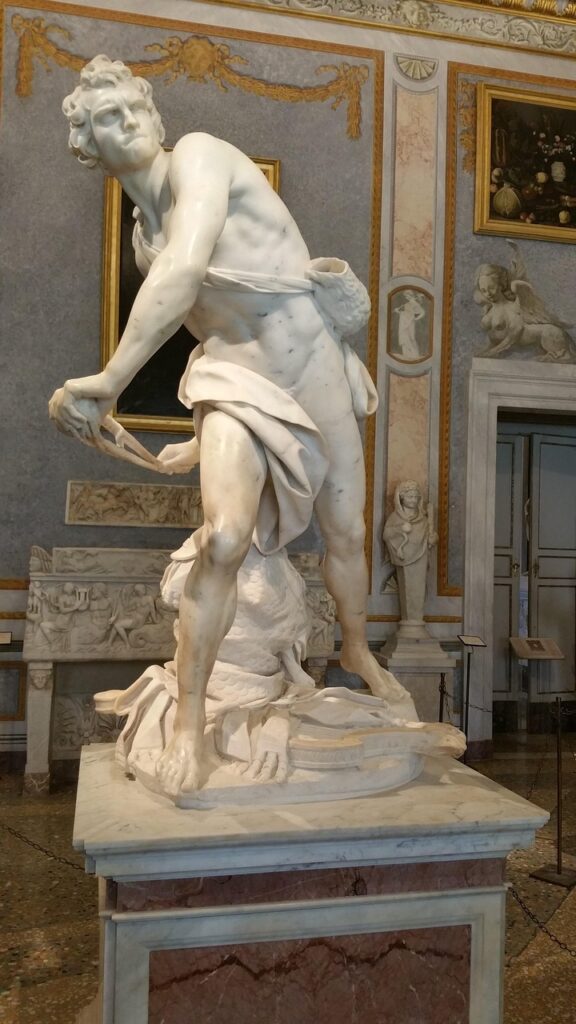
With Faith Like David, face life’s giants confidently. With Faith Like David, God equips you with His armor and courage and we can confront our Goliaths today. This devotion reminds us that spiritual battles are won when we trust God and equip ourselves with His armor.
Life Application
David’s courage in facing Goliath inspires us to confront life’s giants boldly. He said, “You come to me with a sword and with a spear and with a javelin, but I come to you in the name of the Lord of hosts, the God of the armies of Israel, whom you have defied” (1 Samuel 17:45). His confidence did not come from his own strength but from trusting God’s power. Likewise, Psalm 23:4 reminds us, “Even though I walk through the valley of the shadow of death, I will fear no evil, for you are with me.”
Paul provides a practical “dress code” for spiritual victory in Ephesians 6:12-17. We must put on:
Applying this armor daily equips us to face challenges with confidence, knowing that God fights alongside us. Just as David faced a literal giant, we encounter personal Goliaths—difficulties, temptations, and fears. Faith is our shield, righteousness protects our hearts, peace steadies our steps, salvation guards our minds, and God’s Word is our offensive weapon. Remember Proverbs 23:7, “As a man thinketh in his heart, so is he.” Faith shapes our mindset, and a mind fixed on God overcomes obstacles.
Take a moment today to meditate on these truths. Face your challenge with faith like David and with God’s armor firmly in place.