
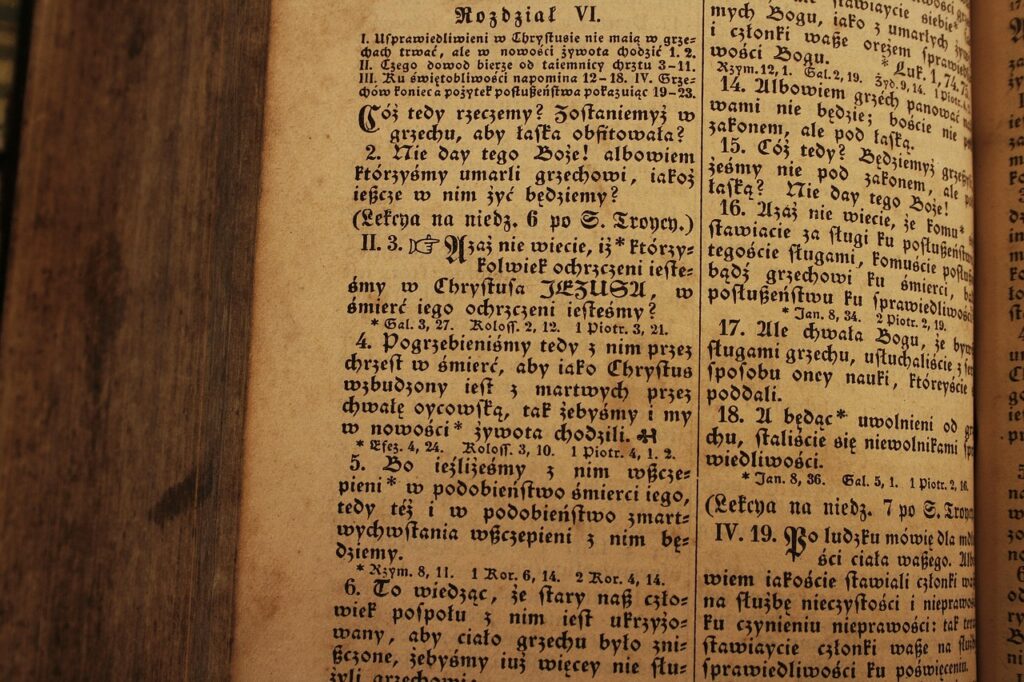
Let Us Pray
Lord, open our eyes to the depth of your Word. Help us to understand the Old Testament so we can fully grasp the promises and person of Jesus in the New Testament. Amen.
Let Us Worship In Song
Introduction
Understand Old Testament: study Hebrew Scriptures to unlock the New Testament prophecy and meaning. Understanding the Old Testament leads you to Christ. The Old Testament context unlocks the New Testament. The Old Testament is not merely background material — it is the foundation. From the 613 commandments that expand the moral and ceremonial life of Israel, to Daniel’s precise seventy weeks prophecy, to Ezekiel’s detailed millennial temple, these scriptures set the stage for everything Jesus accomplished and will accomplish. Study of the Hebrew Scriptures clarifies the New Testament in ways a New-Testament-only reading cannot.
Life Application — Understand Old Testament
When we study the Old Testament we discover patterns, promises, and prophetic timelines that point directly to Jesus. The focus is practical: grow in conviction, deepen worship, and sharpen proclamation. Understand Old Testament as a daily discipline — not a one-time read — and you will read the Gospels and Epistles with fresh eyes.
Daniel 9:24–27 (KJV)
Seventy weeks are determined upon thy people and upon thy holy city, to finish the transgression, and to make an end of sins, and to make reconciliation for iniquity, and to bring in everlasting righteousness, and to seal up the vision and prophecy, and to anoint the most Holy.
“Know therefore and understand, that from the going forth of the commandment to restore and to build Jerusalem unto the Messiah the Prince shall be seven weeks, and threescore and two weeks: the street shall be built again, and the wall, even in troublous times.
“And after threescore and two weeks shall Messiah be cut off, but not for himself: and the people of the prince that shall come shall destroy the city and the sanctuary; and the end thereof shall be with a flood, and unto the end of the war desolations are determined.
“And he shall confirm the covenant with many for one week: and in the midst of the week he shall cause the sacrifice and the oblation to cease, and for the overspreading of abominations he shall make it desolate, even until the consummation, and that determined shall be poured upon the desolate.”
Daniel’s prophecy supplies a timeline. Calculated on the Jewish calendar, many students of Scripture see how these “seventy weeks” point to the timing of Jesus’ public ministry and crucifixion, and how they also anticipate future events — testimony to how Old Testament prophecy reaches into the New.
Ezekiel 40:1–4; Ezekiel 43:7 (KJV)
“In the five and twentieth year of our captivity, in the beginning of the year, in the tenth day of the month, in the fourteenth year after that the city was smitten, in the selfsame day the hand of the LORD was upon me, and he brought me thither.
“In the visions of God brought he me into the land of Israel, and set me upon a very high mountain, by which was as the frame of a city on the south.”
And Ezekiel 43:7: “And he said unto me, Son of man, the place of my throne, and the place of the soles of my feet, where I will dwell in the midst of the children of Israel for ever, and my holy name, shall the house of Israel no more defile …”
Ezekiel’s long vision (chapters 40–48) describes a restored temple, appointed sacrifices, and a priestly order in a coming age. This vision includes details about measurements, gates, chambers, and the resumed worship life — including animal sacrifices — in a future administration. That specificity helps New Testament readers understand Revelation’s temple imagery and the millennial themes referenced elsewhere. The Hebrew Scriptures give the categories and vocabulary that the New Testament assumes: covenant, sacrifice, and kingship.
Zechariah 14 (selected, KJV)
“Behold, the day of the LORD cometh, and thy spoil shall be divided in the midst of thee.”
“And his feet shall stand in that day upon the mount of Olives… and the LORD my God shall come, and all the saints with thee.
Zechariah adds to the Old Testament witness about the Lord’s return and the restoration of Jerusalem — themes the New Testament returns to repeatedly. Reading Old Testament prophecy reveals the threads the New Testament weaves into its narrative.
So how should you apply this? First, take a prophetic book or a Torah portion and read it with Gospel lenses. Cross-reference prophecies quoted in the New Testament and note how the gospels and epistles interpret Old Testament promises. Second, teach the patterns you find: covenant, sacrifice, and kingship. Third, let the Hebrew Scriptures sharpen your preaching so your congregation sees continuity from Genesis to Revelation. Understand Old Testament three ways: read it, study its prophecies, and apply its theology. Over time, the New Testament will read like the fulfillment of a story you already know, not as disconnected fragments.
Begin in small steps: read a Psalm with a Gospel in mind, trace Old Testament prophecies that the New Testament cites, or study Daniel and Zechariah in a group setting. Use trustworthy commentaries and the curriculum your church provides. When we intentionally study the Old Testament, we gain doctrinal clarity and prophetic perspective that strengthen faith and make our proclamation of Christ clearer. Understand Old Testament is not just a slogan — it is a discipline that transforms how we read and preach the New Testament.
Let Us Worship In Song
Call to Action
👉 https://devotionsdonedaily.com/subscribe/
Acknowledgments
We thank:
Pixabay for free, high-quality artwork.
AZ Quotes for quotations when appropriate.
YouTube Gospel Music for beautiful worship music.
We recommend GotQuestions.org for further Bible study.